Idioma

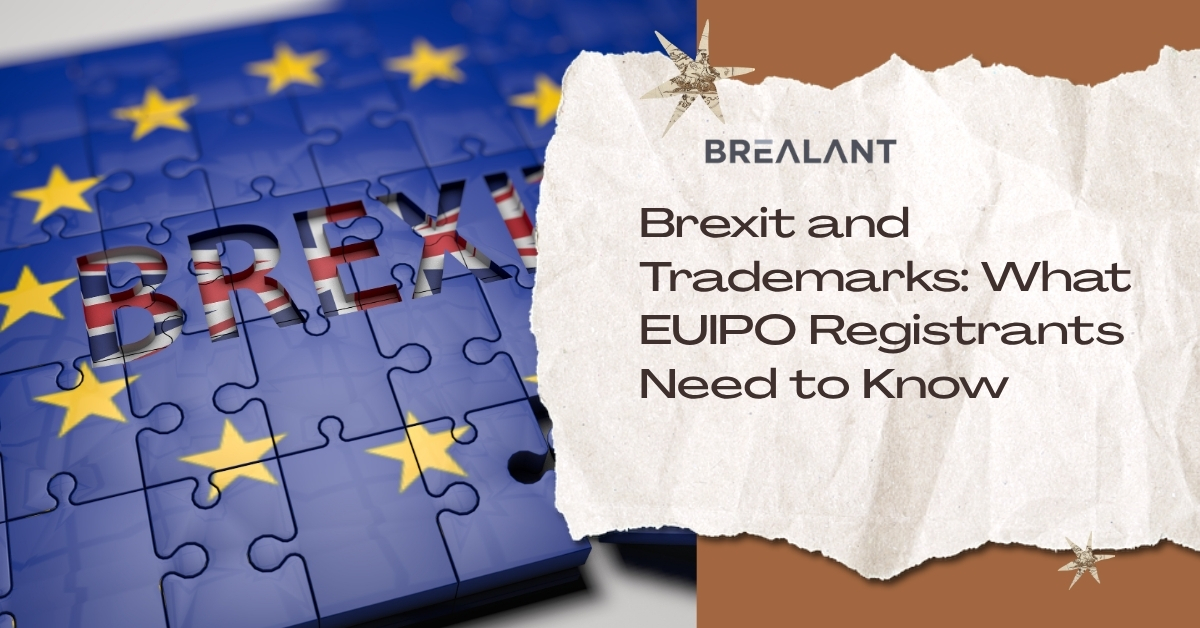
La culminación del período de transición del Brexit el 1 de febrero de 2020 provocó cambios significativos en el panorama de la propiedad intelectual (PI), particularmente en el ámbito de las marcas. Para los solicitantes de registro en la Oficina de Propiedad Intelectual de la Unión Europea (EUIPO), la salida del Reino Unido de la Unión Europea requiere una comprensión cuidadosa del nuevo marco de marcas. Cuando el Reino Unido (RU) salió formalmente de la Unión Europea (UE), regulación de marcas y los cambios de procedimiento se volvieron inevitables.
En este blog, profundizaremos en las consideraciones y cambios clave que los solicitantes de registro en la EUIPO deben tener en cuenta en la era posterior al Brexit.
Quizás el cambio más impactante resultante del Brexit sea la separación de los sistemas de marcas del Reino Unido y de la UE. Antes del 1 de enero de 2021, las empresas podrían obtener protección de marca para el Reino Unido y la Unión Europea mediante una única solicitud ante la EUIPO.
Sin embargo, después del Brexit, los solicitantes de registro deben ser conscientes de que sus marcas comerciales existentes en la UE ya no cubren automáticamente el Reino Unido. Para mantener la protección en el Reino Unido, los solicitantes de registro deben realizar una solicitud por separado ante la Oficina de Propiedad Intelectual del Reino Unido (UKIPO). El enfoque de doble vía garantiza una cobertura integral en ambas jurisdicciones.
La buena noticia para los solicitantes de registro de la EUIPO es que la Oficina de Propiedad Intelectual del Reino Unido reprodujo automáticamente las marcas comerciales de la UE existentes. Esta replicación garantiza la continuación de la protección de las marcas en el Reino Unido sin requerir una acción inmediata por parte de los solicitantes de registro. La UKIPO creó marcas comerciales británicas "comparables" que reflejan los derechos existentes en la UE.
Sin embargo, si bien esta replicación automática proporciona continuidad, las empresas con planes de expansión y nuevas marcas deben ser proactivas para asegurar registros separados para el Reino Unido.
Los solicitantes de registro de la EUIPO gestionan ahora carteras de marcas duales: una para la UE y otra para el Reino Unido. Esta dualidad trae consigo consideraciones administrativas, incluidas renovaciones, cambios y posibles desafíos a las marcas. Las empresas deben desarrollar estrategias claras para mantener y hacer cumplir sus marcas en ambas jurisdicciones.
Para una gestión continua de la cartera, las empresas deben realizar un seguimiento de las fechas de renovación, los cambios de propiedad y cualquier posible infracción. Las soluciones de software y los servicios profesionales pueden ayudar a agilizar la gestión de carteras duales, garantizando que no se pasen por alto plazos críticos.
El principio de agotamiento de los derechos de propiedad intelectual, que rige el control de los bienes una vez que han ingresado al mercado, ha cambiado después del Brexit. Las normas de agotamiento del Reino Unido y de la UE ahora son distintas, lo que afecta las importaciones paralelas y la capacidad de los propietarios de marcas para controlar la distribución de sus productos.
Los solicitantes de registro de la EUIPO que participan en el comercio transfronterizo deben considerar cuidadosamente estos cambios para sortear las complejidades de las normas de agotamiento en el Reino Unido y la UE. Esto se vuelve particularmente importante para las empresas en industrias donde la distribución internacional juega un papel importante.
Los propietarios de marcas deben estar atentos a la hora de controlar y hacer cumplir sus derechos en el Reino Unido y la UE. Las infracciones pueden ocurrir en ambos lados de la división recién establecida, y es esencial actuar con prontitud para proteger la integridad de la marca. Si bien la EUIPO sigue siendo fundamental para hacer cumplir los derechos de marca de la UE, la UKIPO es la autoridad clave para hacer cumplir los derechos de marca en el Reino Unido.
Los servicios de monitoreo y asesoría legal pueden ayudar a los registrantes a mantenerse informados sobre posibles infracciones y tomar medidas rápidas para abordar cualquier uso no autorizado de sus marcas. Una estrategia de aplicación proactiva es fundamental para preservar el carácter distintivo y el valor de las marcas.
Para las empresas que están considerando nuevas marcas, es esencial planificar estratégicamente. Los solicitantes de registro deben decidir si buscan protección en la UE, el Reino Unido o ambos. Comprender el mercado objetivo, los objetivos comerciales y los desafíos potenciales de cada jurisdicción es crucial para tomar decisiones informadas.
Como parte de esta planificación estratégica, los solicitantes de registro deben evaluar los beneficios de la protección en toda la UE frente a las ventajas potenciales de obtener derechos en el Reino Unido por separado. Factores como el alcance del mercado, la estrategia de marca y las consideraciones presupuestarias influirán a la hora de determinar el enfoque más eficaz.
El panorama de marcas posterior al Brexit presenta un cambio de paradigma para los solicitantes de registro en la EUIPO, lo que requiere un enfoque estratégico de gestión de la propiedad intelectual. La separación de los sistemas de marcas del Reino Unido y de la UE requiere que las empresas naveguen de manera proactiva en el marco de doble vía, teniendo en cuenta los derechos existentes, las nuevas solicitudes, las reglas de agotamiento y las estrategias de aplicación.
Los solicitantes de registro de la EUIPO deben adaptarse a las realidades de la gestión de carteras de marcas duales, garantizando que cumplen con las distintas regulaciones tanto en la UE como en el Reino Unido. Si bien existen desafíos, también surgen oportunidades de crecimiento y expansión a medida que las empresas se posicionan estratégicamente en el cambiante entorno de marcas posterior al Brexit.
Mantenerse informado, buscar asesoramiento legal y aprovechar la tecnología para la gestión de carteras será fundamental para afrontar con éxito las complejidades del registro y la protección de marcas tras el Brexit. Al comprender los matices del nuevo marco de marcas a través del enfoque integral guiado por Brealant, los solicitantes de registro de la EUIPO pueden salvaguardar proactivamente su propiedad intelectual y posicionarse para el éxito en los mercados en evolución del Reino Unido y la UE.
%2520(1).jpeg)
.avif)


.svg)
.svg)
.svg)